
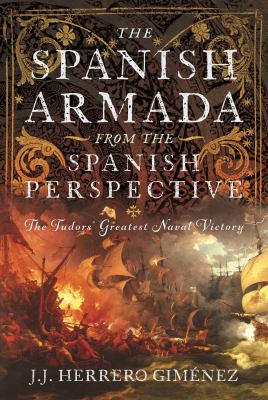
For the first time in the English language, this pivotal battle is analysed by a Spaniard, drawing on contemporary Spanish accounts and more recent critical histories. The background to the conflict between Philip II and Elizabeth I the Anglo-Spanish War of 1585 to 1604 is explained as seen from the Spanish viewpoint and the main characters of the age, such as Alvaro de Bazan, Alexander Farnese and, of course, Drake and Hawkins, are shown in a somewhat different light to that usually presented to British readers. The Spanish Armada From The Spanish Perspective begins with a description of the Spanish navy, its origins and its composition, and an examination of the usual claim that it was, at that time, the finest in the world. The Spanish dominance of the western Mediterranean and of the Atlantic is explained and the great galleons of the era and their capabilities are described. The organization of the Armada, and its composition is detailed, as are the seven fleets into which it was divided. Its ships and commanders are explored, especially its commander-in-chief, the Duke of Medina-Sidonia, a man who had little knowledge of the sea. All this is a prelude to the launching of the Armada and the dramatic voyage to England. The battle or, more precisely, the five battles that took place at Plymouth on 31 July 1588, at Portland Blind on 2 August, the Isle of Wright on 3 and 4 August, and the last battle at Brulotes (Calais) on 7 August form the main focus of the book. Equally intriguing is the account of the gruelling return journey made by the surviving ships from the battles, across the coasts of Scotland and Ireland, where bad weather eventually destroyed many of the ships and of the large number of the sailors who managed to swim ashore who were killed on reaching land. The fate of many of these prisoners is highlighted. The book also lists the main Spanish commanders who died during the battles and the return voyage, individuals such as Juan Martinez de Recalde and Miguel de Oquendo. Finally, the consequences of the campaign are considered from the Spanish viewpoint. Did Spain manage to recover quickly from the terrible losses suffered? Did England take advantage of the weak position in which the Spanish navy was left? Maybe a truly balanced perspective of the defeat of the Spanish Armada can now be realised as, at last, we can also truly see it from the Spanish perspective.