
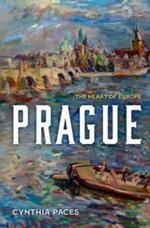
Poets have called Prague the City of One Hundred Spires, Golden Prague, Magic Prague, and the Mother of Cities. Millions of tourists visit the Czech capital each year, awed by the blend of architectural styles and the dramatic landscape. St. Vitus’s Gothic cathedral towers above the Charles Bridge and the Vltava River. Winding Gothic alleys lead to elegant squares lined with Renaissance palaces, Baroque statues, and modern glass structures. Yet, the city’s beauty often obscures centuries of ethnic and religious conflict. In Prague’s Jewish Quarter, the names of nearly 80,000 Holocaust victims are inscribed on the walls of Pinkas Synagogue, which stands as a reminder of a complex and violent past. Cynthia Paces traces the history of Prague since the late ninth century, when Slavic dukes built the first church and fortifications on the castle hill. Over the course of eleven centuries, Prague vacillated between a political center and a city on the periphery of empires. The Holy Roman Emperors Charles IV and Rudolph II transformed Prague into a European center of arts, politics, and pilgrimage, but centuries of religious conflict, the defenestrations of Prague, and the Thirty Years War threatened to destroy the city. In the twentieth century, Prague was hailed as a beacon of democracy, led by philosopher presidents T. G. Masaryk and Vaclav Havel, but its citizens also endured violent antisemitism, a Nazi occupation, and a repressive communist regime.While illuminating a millennium of political, cultural, and social developments, Prague: The Heart of Europe captures the lives of the men and women who have called the city home.